Walk into a modern cannabis dispensary and the numbers on the jars can look almost like a technological arms race. Flower advertised at 20 percent THC is ordinary. Products approaching 30 percent are marketed as exceptionally potent. Above 30 percent, the numbers can begin to sound extraordinary: 32, 35, even 40 percent THC.
But there is a fundamental scientific question behind those labels: how much THC can a cannabis flower actually contain?
The answer is not a simple percentage. There is no scientifically established hard ceiling at exactly 30 percent THC, meaning it would be incorrect to claim that cannabis flower can never exceed that figure. However, available research suggests that flower in the 30-percent range is unusual, while substantially higher claims deserve careful scrutiny.
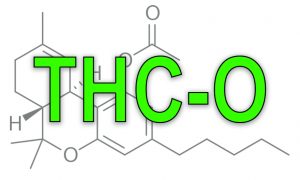
Part of the confusion comes from the chemistry of the cannabis plant itself. In freshly harvested flower, much of the cannabinoid exists as tetrahydrocannabinolic acid, or THCA, rather than active delta-9 THC. When cannabis is heated, THCA undergoes decarboxylation and is converted into THC. Laboratory reports may therefore use calculated “total THC” values that account for both compounds rather than simply measuring delta-9 THC alone.
This distinction matters because a number printed on a package can represent a calculation rather than a direct measurement of the THC a consumer will ultimately inhale.
The bigger issue is laboratory accuracy.
In a 2025 study published in Scientific Reports, researchers independently analyzed 178 cannabis flower products purchased from Colorado dispensaries. The average labeled potency was 22.5 percent, compared with an average measured potency of 20.8 percent. Although some products carried labels as high as 39 percent THC, the highest measured flower in the study was 33 percent. Only 56.7 percent of the products fell within the researchers’ defined accuracy range.
Earlier research produced similar concerns. In a study of 23 commercially available Colorado flower samples, researchers found that the average measured THC concentration was approximately 15 percent. Eighteen of the samples tested below the minimum potency claimed on their labels.
Another study examined 107 commercial flower samples from Colorado, Oregon, and California. The researchers found labeled THC concentrations ranging from approximately 12 percent to more than 58 percent. Actual laboratory measurements ranged from approximately 13 percent to 36.5 percent. Only 32 samples were within 20 percent of their labeled potency.
These findings don’t establish that a cannabis plant can never produce flower above 30 percent THC. They demonstrate something more useful: extraordinarily high potency claims should not automatically be treated as precise measurements of biological reality.
Cannabis biology imposes its own constraints. Cannabinoids are produced and stored primarily in glandular trichomes, the microscopic resin-producing structures covering the flowers. The amount of cannabinoid a plant can accumulate depends on genetics, trichome development, environmental conditions, plant maturity, cultivation practices, and other biological factors. A flower cannot simply continue accumulating THC indefinitely.
That makes the pursuit of increasingly extreme THC percentages an interesting example of the difference between biological potential and commercial measurement.
A cultivator can select genetics for cannabinoid production. A sophisticated growing operation can optimize environmental conditions. A laboratory can employ highly sensitive analytical equipment. None of those factors, however, eliminates the biological limitations of the plant or the possibility of variation and error during sampling and testing.
For consumers, the practical lesson is not that every cannabis flower advertised above 30 percent is fraudulent. It is that THC percentage should be viewed as a laboratory measurement with uncertainty—not as a definitive score for cannabis quality.
A 30-percent label may indicate exceptionally potent flower. It may also reflect differences in sampling, testing methodology, laboratory performance, or reporting practices.
And potency is only one part of cannabis chemistry.
Terpenes, minor cannabinoids, genetics, curing, freshness, and the broader chemical profile of the flower can all influence its characteristics. Two samples with identical THC percentages can produce noticeably different experiences because their chemical compositions are otherwise different.
The cannabis industry has spent decades breeding plants toward greater cannabinoid production. That pursuit has produced remarkably potent cultivars.
But science asks a different question from marketing. Not “How high can the number go?” Instead: “How accurately does the number describe what is actually in the flower?”
That may ultimately be the more important measure of progress.